The garage floor decision looks simple on installation day and stops being simple at year twelve. A retail kit costing $60–$160 and a professionally installed system at $5.00 to $15.00 per square foot look like two versions of the same purchase. They are not. They are two different products with two different lifespans, and the gap becomes visible only after a dozen Northern Nevada summers and winters have been driven across the slab. This article runs both lines across 12 years on numbers rather than adjectives. On a Reno slab the same arithmetic gets worse rather than better: the Truckee Meadows swings from a 108 F record high to a -16 F record low, and USDA-NRCS maps ground here as either well-drained alluvial fan soil or poorly drained flood-plain soil over a seasonally high water table, so a thin kit film that ignores moisture fails sooner than the national averages suggest.
Two Products Under One Finish Name
A retail kit is a water-based product fortified with epoxy, applied in one or two thin layers and held to the slab by surface adhesion alone. It builds 2–5 mils of dry film, about the thickness of a sheet of paper, with no broadcast aggregate in the film. A kit film sits on the concrete.
A professional system is a 100 percent solids resin applied in three or more layers over a slab profiled to CSP 3 to 4. It builds 20–35 mils dry film, with aggregate broadcast into the wet resin for texture and sacrificial thickness, and it cross-links into the concrete. One of those two floors gets recoated; the other gets swept.
What the Kit Line Costs Over 12 Years
The kit path starts cheap and keeps spending. Every cycle means stripping the failed film, cleaning the concrete underneath and re-applying to a slab that has already proven it will not hold. Across 12 years the materials total $720 to $1,920 in replacement product, in increments small enough that no single purchase feels like a decision at the time.
The kit line also carries a cost that never appears on a quote: re-application weekends, and a garage out of service for another cure window each time. Failure commonly arrives inside 24 months, which is what sets up the repeating cycle.
What the Professional Line Costs
The professional line starts higher and then stops. Initial cost runs $5.00 to $15.00 per square foot depending on slab condition, system type and how much surface preparation is required, which puts a two-car garage between $2,500 and $6,000.
| Horizon | DIY kit path | Professional system |
|---|---|---|
| Month 0 | $60–$160 in kit materials | $5.00 to $15.00 per square foot |
| Month 18 | Failure and first recoat | No spend |
| Month 144 | $720 to $1,920 in materials, plus weekends | $0 repair cost, 12 to 15+ years before a topcoat rejuvenation |
After installation the line is flat, and the maintenance is mopping and sweeping rather than a stripping and recoating programme.
Downtime Is a Cost, and in Reno It Is Real
A garage that cannot hold cars pushes them onto the driveway, which matters through hard Northern Nevada winters. Systems differ in how long the slab stays out of service: a fast-cure polyaspartic is published for foot traffic at 24 hours, and where a floor is taken out of service after a failure the rule is 48 hours before pedestrian traffic and 72 hours before vehicles.
Each recoating cycle repeats that downtime, and across a 12-year horizon the kit line accumulates it several times over. That is time the professional line never spends, and it is exactly the kind of cost that never reaches a spreadsheet.
Where the Local Climate Widens the Gap
Local conditions load a film in ways that do not show up in the first month. Temperature runs from a January mean high near 45 °F to a July mean high near 90 °F, with records of 108 °F and −16 °F. Intense UV, summer surface heat under a parked tire, ice-melt chemicals tracked in through winter, and moisture that perches above a duripan or rises from a seasonal high water table all work on the film at once.
A 2–5 mil film has no material to resist any one of those. A 20–35 mil build spreads the same load across more material.
Running the Audit on Your Own Garage
Take the square footage of your slab and multiply it by the $5.00 to $15.00 per square foot range for the professional line. Then total 12 years of kit purchases against the $720 to $1,920 materials figure and add the weekends you would spend stripping, patching and re-applying.
Compare the two lines at month 144 rather than month zero. TMWA publishes water quality by neighbourhood, and harder water leaves mineral film that shows on any finish, so cleaning matters on both paths. As an independent matching service we do not install or guarantee floors; we help homeowners compare providers using the numbers that actually differ between quotes.
Frequently asked questions
How much does a DIY kit cost compared with a professional system?
A retail kit runs $60–$160. Professional installation runs $5.00 to $15.00 per square foot, which puts a two-car garage between $2,500 and $6,000. The 12-year materials total for the kit path is $720 to $1,920.
Is $720 to $1,920 the whole cost of the kit path?
It is the 12-year materials total. It excludes the weekends spent stripping and re-applying, and the repeated downtime while each new film cures. Counting that unpaid time changes the comparison for most homeowners.
Why do DIY epoxy floors peel?
Because they bond to the surface only. With one or two thin layers and no mechanical profile in the concrete, there is nothing for the film to lock into, so adhesion failure is likely and usually ends in a full recoat.
Does a professional floor ever need repair?
Over the same 12-year window the professional repair cost is $0. Routine cleaning continues, and physical damage to the slab should still be assessed, but there is no recurring stripping and recoating programme driving the budget.
Why does the gap show up faster in Reno?
Big daily and seasonal temperature swings, intense UV, summer surface heat under parked tires and winter ice-melt chemicals all load the film. A 2–5 mil coating has nothing to give under those conditions; a 20–35 mil build does.
Sources
- NWS Reno climate products (Reno–Tahoe International Airport)
- USDA-NRCS Official Soil Series Description: Truckee series
- USDA-NRCS Official Soil Series Description: Reno series
- TMWA 2026 water quality report (2025 data)
Related
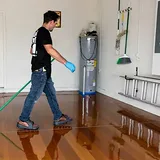
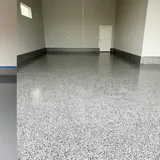
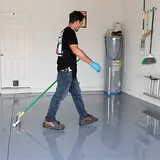
Epoxy Flooring services in Reno
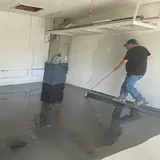
Garage Epoxy
A Reno garage slab works harder than any other floor in the house: summer surface heat, winter ice-melt brine, and a car that parks in the same two spots every night.
Basement Epoxy
A basement floor in Reno is a moisture question before it is a finish question, and the answer is decided by the slab, not by the coating.
Commercial Epoxy
A commercial floor is bought in hours of uptime, not in square feet of resin.
Metallic Epoxy
Metallic epoxy is a design floor built on an engineering system: the swirl is the topcoat's business, the bond is the slab's.
Polyaspartic Coatings
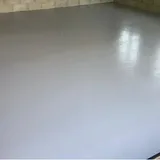
Polyaspartic is the coating that made the one-day floor possible, and it is the layer that decides how a Reno floor ages under a high-desert sun.
Concrete Coating Sealing
Raw concrete is a working surface, not a finished one, and sealing it is the cheapest way to stop dusting, staining and moisture at the surface.
Areas we serve
Reno
Epoxy Flooring in Reno, NV - costs, water and soil notes.
Sparks
Epoxy Flooring in Sparks, NV - costs, water and soil notes.
Sun Valley
Epoxy Flooring in Sun Valley, NV - costs, water and soil notes.
Spanish Springs
Epoxy Flooring in Spanish Springs, NV - costs, water and soil notes.
Fernley
Epoxy Flooring in Fernley, NV - costs, water and soil notes.
Dayton
Epoxy Flooring in Dayton, NV - costs, water and soil notes.
Carson City
Epoxy Flooring in Carson City, NV - costs, water and soil notes.