Get Matched With a Local Pro
Tell us what you need and we route it to local epoxy flooring contractors who do this work. Free, no obligation.
Services
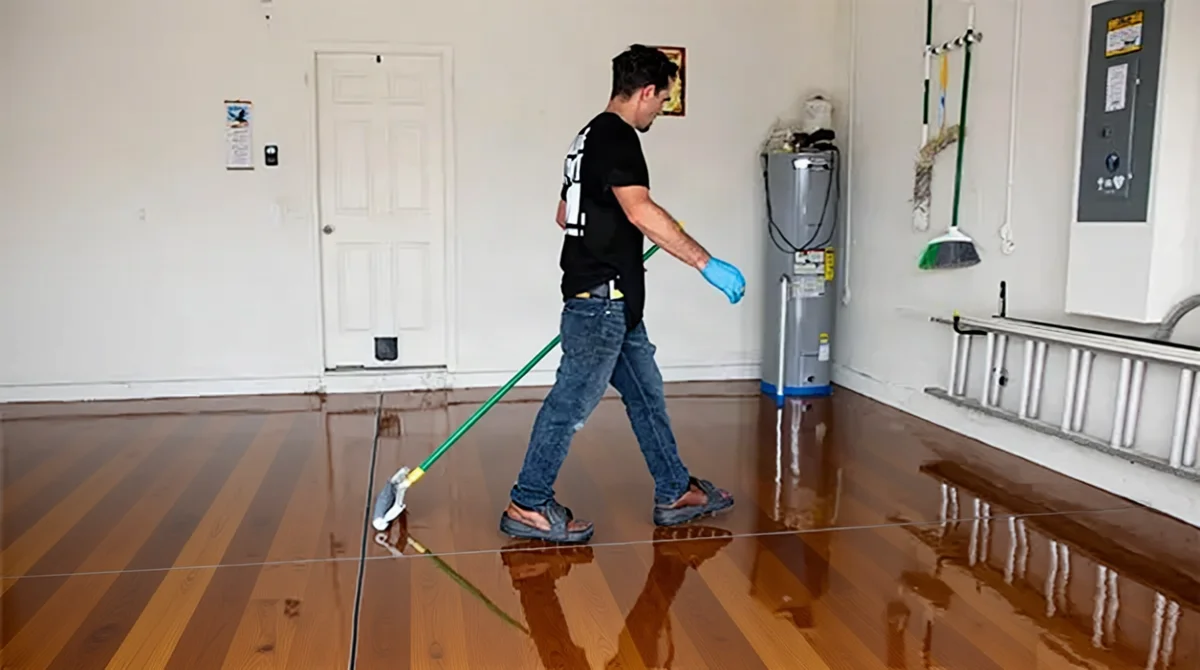
Garage Epoxy Flooring
A Reno garage slab works harder than any other floor in the house: summer surface heat, winter ice-melt brine, and a car that parks in the same two spots every night.
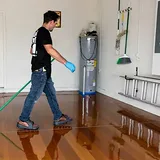
Basement Epoxy Flooring
A basement floor in Reno is a moisture question before it is a finish question, and the answer is decided by the slab, not by the coating.
Commercial Epoxy Flooring
A commercial floor is bought in hours of uptime, not in square feet of resin.
Metallic Epoxy Flooring
Metallic epoxy is a design floor built on an engineering system: the swirl is the topcoat's business, the bond is the slab's.
Polyaspartic Coatings
Polyaspartic is the coating that made the one-day floor possible, and it is the layer that decides how a Reno floor ages under a high-desert sun.
Concrete Coating & Sealing
Raw concrete is a working surface, not a finished one, and sealing it is the cheapest way to stop dusting, staining and moisture at the surface.
What epoxy flooring costs in Reno in 2026
| Project | Published range |
|---|
| Flake system, per sq ft | $3 - $8 |
| Polyaspartic, per sq ft | $5 - $9 |
| Two-car garage, installed | $2,500 - $6,000 |
| Professional install, full range | $5.00 - $15.00 per sq ft |
| Retail DIY kit | $60 - $160 |
| DIY maintenance over 12 years | $720 - $1,920 |
| Repair cost over 12 years, professional system | $0 |
Figures are the published ranges carried over from the source pack, unrounded. Full cost guide.
Why Reno slabs need the moisture question answered first
Reno sits in the Truckee Meadows at roughly 4,500 ft, and the ground under it is not uniform. USDA-NRCS maps the Reno series on the alluvial fans, with a duripan 50 to 100 cm down that holds water, and the Truckee series on the old flood plain, which is poorly drained with a seasonally high water table. Where a slab sits on ground like that, vapour moves up through the concrete even though the air here is dry - average July relative humidity in Reno is around 30%. Add the swing from a 108 F record high to a -16 F record low, and the usual causes of failure are moisture, preparation and thermal cycling rather than the resin brand.
- Peeling and lifting — Peeling and lifting is the most visible epoxy failure and the least specific.
- Hot-tire and white spots — Hot-tire pickup and white spotting look like dirt, and they are not.
- Cracking and delamination — Two failures get called cracking, and they need different money spent on them.
- Moisture and blistering — Blisters under an epoxy film are almost always vapour that came out of the slab and could not get through the coating.
- Chemical and oil staining — Most staining on a garage or shop floor is one of three things, and they cost different money.
- Failed DIY floors — A DIY kit that failed did so for one of two reasons, and the difference decides whether a rebuild is even possible.
20 free tools, no sign-up
Start with the slab moisture check and the measurement calculator, then run the cost estimator, the system selector and the quote comparison before you call anyone. Twenty tools, no sign-up.
Open all 20 tools → | System advisor
Areas we cover
From the blog
All articles →
Ready to Get Started?
Free estimates from trusted Reno epoxy flooring contractors.